

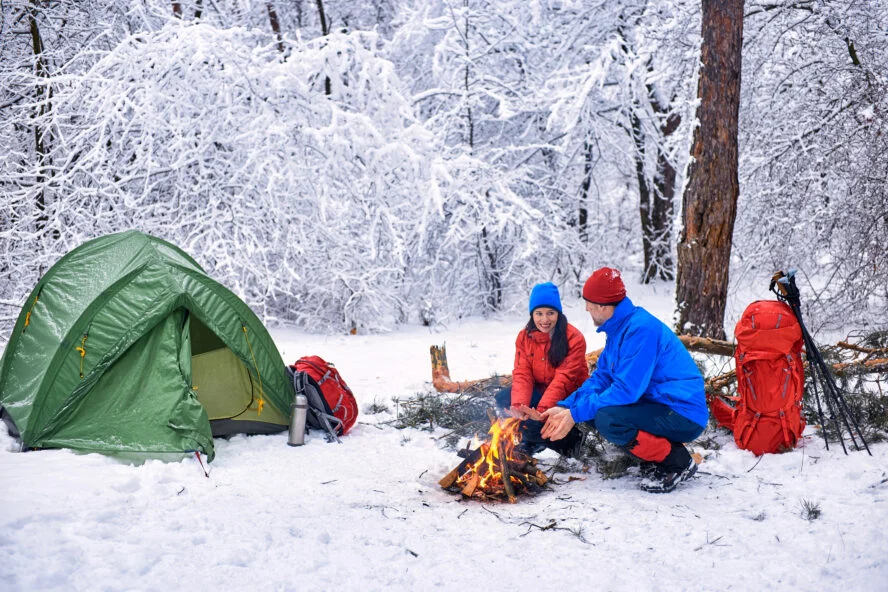
For many outdoor enthusiasts, camping season ends when the first autumn leaves drop and the temperature plunges. However, skipping the coldest months means missing out on some of the most serene and pristine experiences nature has to offer. A snow-covered landscape brings absolute silence, a complete lack of crowds, and an entirely different set of wilderness skills to master.
The primary barrier for most people is fear of the cold. While a winter environment is less forgiving than a summer woods, staying safe and comfortable is entirely possible with the right preparation. Winter camping is less about enduring hardship and more about understanding thermodynamics, moisture management, and targeted gear selection. This comprehensive guide outlines how to transform a frozen backcountry into a safe, warm campsite.
1. The Science of Winter Layering
To stay warm in sub-freezing conditions, you must think of your clothing as an integrated climate control system. The absolute rule of winter camping is to avoid sweating. Sweat wets your clothing, and when you stop moving, that moisture quickly cools, putting you at immediate risk for hypothermia. You manage this by adjusting layers before you get too hot or too cold.
The Base Layer: Moisture Management
The layer directly against your skin must draw sweat away from your body. Look for heavyweight merino wool or high-quality synthetic fabrics like polyester. Never wear cotton base layers, including cotton underwear or socks. Cotton absorbs moisture and holds it against your skin, stealing away critical body heat.
The Mid-Layer: Insulation
The mid-layer traps the warm air generated by your body. High-loft fleece, synthetic fill jackets, or down jackets are excellent choices. Down offers the best warmth-to-weight ratio and compresses tightly into a backpack, but it loses its insulating power completely if it gets wet. Synthetic insulation is heavier but continues to trap heat even if exposed to moisture.
The Outer Layer: Weather Protection
Your shell jacket and pants protect you from biting winds, falling snow, and sleet. A waterproof, breathable fabric like Gore-Tex is the standard. Make sure your shell has ventilation zippers, often located under the armpits or along the thighs, to dump excess heat quickly during strenuous activities like snowshoeing or hiking up steep inclines.
2. Choosing and Optimizing Your Sleep System
When you sleep, your metabolism slows down, and your body generates less heat. Your sleeping gear is your final line of defense against the freezing night air and the frozen ground beneath you.
Sleeping Pads: The R-Value Factor
Many novice winter campers buy a highly rated sleeping bag but still freeze because they overlook their sleeping pad. The cold ground will conduct heat directly away from your body faster than the air will. You need a pad with a high R-value, which is the measure of thermal resistance.
For winter camping on snow, look for an R-value of 5.0 or greater. A highly effective budget-friendly tactic is to stack two pads. Place a closed-cell foam pad directly on the snow, and layer an insulated, inflatable pad on top of it. This combination provides a massive barrier against conductive heat loss.
The Truth About Sleeping Bag Ratings
When selecting a sleeping bag, pay attention to the comfort rating rather than the transition or lower limit rating. If a bag is rated to zero degrees Fahrenheit, that usually means the average person will survive at that temperature, not that they will sleep comfortably. For a peaceful night, choose a bag with a comfort rating that is at least ten degrees lower than the coldest temperature you expect to encounter.
3. Site Selection and Shelter Setup
Setting up camp in the snow requires more deliberate effort than pitching a tent on dry summer dirt. Your shelter needs protection from wind and structural support to handle potential overnight snowfall.
Packing Down the Snow
Before you pitch your tent, you must prepare the footprint. If you set a tent directly onto soft, powdery snow, your body heat will melt uneven pockets underneath you during the night, leaving you sleeping in a matrix of uncomfortable frozen ruts.
Use snowshoes, skis, or your boots to thoroughly stomp down a flat platform. Let the packed snow sit for fifteen to twenty minutes to allow the snow crystals to refreeze and harden. This creates a solid, durable floor that will support your weight without collapsing.
Securing the Tent
Standard aluminum tent stakes are virtually useless in soft snow. You will need specialized snow stakes, which are wider and feature a curved, u-shaped profile to grab the pack. If you do not have snow stakes, you can use deadman anchors. Tie your tent guy lines around sturdy tree branches, rocks, or stuff sacks filled with snow, and bury them deep into the snow pack, stamping them down until they freeze solid.
4. Hydration and High-Calorie Nutrition
Your body works significantly harder in cold weather just to maintain its core temperature. This constant thermoregulation burns a massive number of calories and expels a surprising amount of water through respiration.
Stoking the Internal Furnace
Winter camping is not the time for a low-calorie diet. You need dense, high-fat, and high-protein foods that digest slowly, keeping your internal furnace burning throughout the night. Dehydrated meals, nuts, cheeses, butter, and meats are staples. A classic cold-weather tip is to eat a high-fat snack, such as a handful of macadamia nuts or a spoonful of peanut butter, right before climbing into your sleeping bag to help your body generate heat while you rest.
The Challenge of Winter Hydration
Dehydration accelerates the onset of hypothermia and exhaustion. However, staying hydrated is tough when your water supply constantly tries to freeze.
-
Stove Reliability: Canister stoves powered by isobutane lose pressure and fail when the canister drops below freezing. Liquid-fuel stoves, which run on white gas, are the gold standard for winter camping because they operate reliably in sub-zero temperatures.
-
Melting Snow: To get water, you will need to melt snow. Always keep a small amount of liquid water in the bottom of your pot when starting this process; pouring loose snow directly into a dry, hot pot will actually scorch the snow, giving the resulting water a bitter, burnt taste.
-
Storage Tactic: Store your water bottles upside down in insulated sleeves. Water freezes from the top down, so keeping the bottles upside down ensures that ice forms at the bottom of the container first, keeping the mouth of the bottle clear.
5. Critical Cold Weather Safety Guidelines
In the winter wilderness, small errors can escalate quickly into genuine emergencies. Understanding how to recognize and treat cold-related injuries is mandatory before leaving the trailhead.
Hypothermia Awareness
Hypothermia occurs when your body loses heat faster than it can produce it. Early warning signs include the “umbles” – stumbling, mumbling, fumbling, and grumbling. Mild shivering is a normal response, but if a campmate starts shivering uncontrollably or suddenly stops shivering while remaining cold and confused, you must act immediately. Strip away wet clothing, get them into a high-quality sleep system, and provide warm, sugary liquids if they are conscious and able to swallow.
Preventing Frostbite
Frostbite is the actual freezing of skin tissue, most commonly occurring on fingers, toes, ears, and the tip of the nose. Pale, cold, or numb skin is the initial warning sign. Protect your extremities by wearing dry, windproof gloves and keeping your boots loose enough to allow healthy blood circulation to your toes. If you suspect frostbite, never rub the affected area, as the ice crystals in the tissue can cause severe cellular damage. Warm the area gradually using skin-to-skin contact, such as placing cold hands inside an armpit.
Frequently Asked Questions
Why shouldn’t I breathe inside my sleeping bag to warm it up?
Breathing inside your sleeping bag introduces highly humid air from your lungs directly into the insulation. The moisture from your breath will condense inside the down or synthetic feathers, quickly dampening the bag and destroying its ability to trap your body heat as the night goes on. Keep your nose and mouth exposed to the open air, and wear a warm beanie or balaclava to protect your head and face.
How do I prevent my boots from freezing solid overnight?
If you leave leather or synthetic boots sitting out in the tent vestibule, the moisture absorbed from your feet during the day will freeze solid, making them nearly impossible to put on the next morning. Remove the boot liners if possible, place them inside a durable stuff sack, and sleep with them inside your sleeping bag. If your boots are too large or dirty, place them inside a waterproof bag at the bottom of your sleeping bag to keep them thawed.
Is a four-season tent absolutely necessary for winter camping?
Not always. A standard three-season tent can work fine if there is no wind and no risk of heavy snowfall. However, four-season tents are designed differently; they feature stronger, thicker poles, geometric designs capable of shedding heavy snow loads, and fabric canopies that block freezing wind and blowing spindrift rather than open mesh panels. If you expect true winter weather, a four-season tent is a vital safety asset.
How do I keep my electronic devices and batteries from dying instantly?
Lithium-ion batteries drain incredibly fast when exposed to sub-freezing temperatures. Keep your cell phone, headlamp batteries, and camera equipment inside an interior pocket close to your body heat during the day. At night, place all electronic devices inside your sleeping bag so your body heat preserves their charge.
What is the purpose of bringing a hot water bottle to bed?
Boiling a pot of water right before bed, pouring it into a hard plastic, wide-mouth water bottle, and checking tightly for leaks creates a powerful heater. Place this hot bottle between your thighs or near your feet inside your sleeping bag. The heat will radiate for several hours, keeping your core warm and accelerating your comfort as you fall asleep.
How do you handle going to the bathroom during a cold winter night?
Holding your urine actually makes you colder because your body has to spend valuable energy keeping that liquid warm. If nature calls in the middle of the night, put on a jacket and take care of it immediately. Many experienced winter campers keep a dedicated, clearly labeled pee bottle inside the tent to avoid having to step outside into a raging winter storm.
How do I dry out damp socks or gloves while at camp?
The most reliable method is using your own body heat. Place damp socks or liner gloves flat against your chest or abdomen underneath your base layers while you hang around camp or sleep. Your natural warmth will dry the clothing over several hours. Never place gear too close to an open campfire, as synthetic materials melt instantly and wet leather will shrink and crack.