

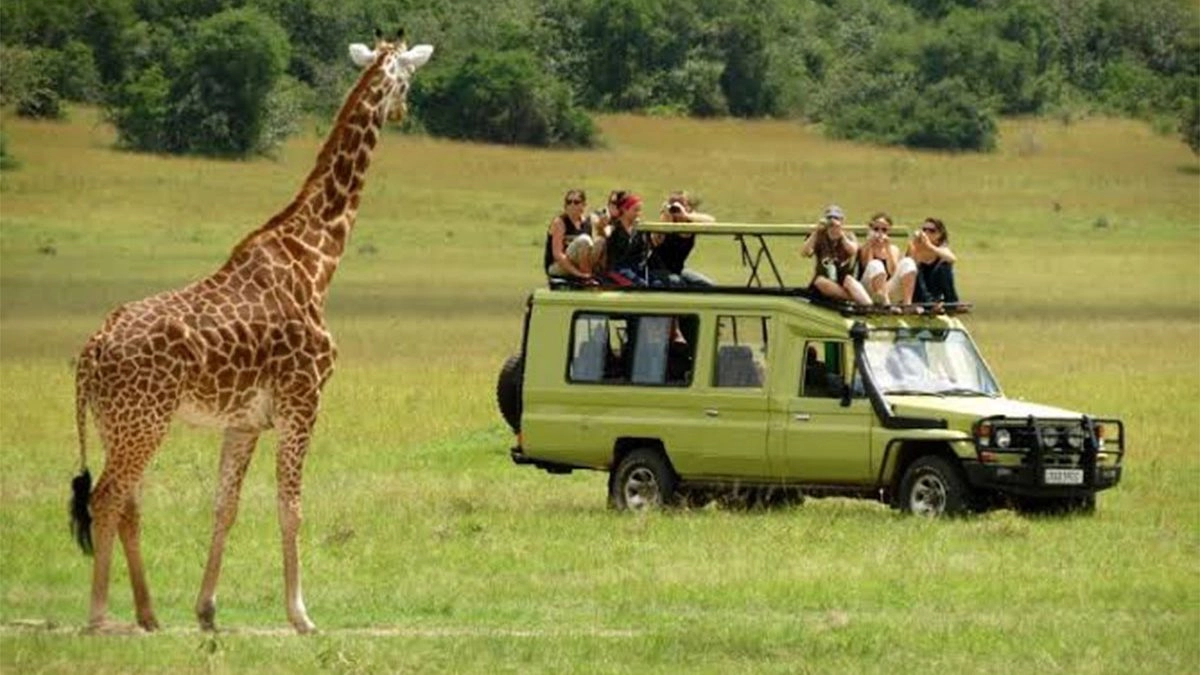
For those who feel the pull of the wild, a standard vacation rarely suffices. There is an unmatched thrill in exchanging cityscapes for vast, untamed horizons where nature dictates the rules. A true wildlife safari is not merely about observing animals from a distance; it is about immersing yourself in their habitats, witnessing the raw drama of survival, and experiencing the profound quiet of the natural world.
From the sun-drenched savannahs of East Africa to the dense, mist-shrouded jungles of India, the world offers extraordinary opportunities to encounter wildlife in its purest form. If you are ready to plan an expedition that will alter your perspective on the planet, these five breathless wildlife adventure safaris deserve a premier spot on your travel bucket list.
1. The Great Migration in the Serengeti National Park, Tanzania
Few natural spectacles match the sheer scale and intensity of the Great Migration. Each year, over two million wildebeest, zebras, and gazelles journey in a massive clockwise circuit across the Serengeti ecosystem in Tanzania and the Maasai Mara in Kenya. This is not a casual stroll; it is a relentless, perilous quest for fresh grazing lands driven by primeval instincts.
The Landscape and Experience
The Serengeti comprises boundless grasslands, rocky outcrops known as kopjes, and acacia-lined rivers. Traversing this landscape in an open-top 4×4 vehicle provides an unobstructed view of the horizon. The air carries the scent of dry grass and the constant, low rumble of hundreds of thousands of hooves.
Key Wildlife Encounters
While the sight of a mega-herd stretching toward the horizon is breathtaking, the drama intensifies at the river crossings. At the Mara and Grumeti rivers, herds gather on the banks, hesitating before plunging into the churning waters. Waiting in the shallows are massive Nile crocodiles, while lions, leopards, and hyenas patrol the shores, seizing the opportunity presented by the chaos.
-
Best Time to Visit: June to October for the dramatic river crossings; January to March for the calving season in the southern Serengeti.
-
Highlight: A sunrise hot air balloon safari over the plains, followed by a champagne breakfast in the bush.
2. Tracking Bengal Tigers in Ranthambore National Park, India
Stepping into Ranthambore National Park feels like entering the pages of a classic adventure novel. Located in the desert state of Rajasthan, India, this reserve blends rich cultural history with rugged wilderness. The park is framed by ancient, crumbling forts, lakeside palaces, and massive banyan trees, creating a dramatic backdrop for wildlife tracking.
The Art of the Safari
Unlike the open plains of Africa, tracking tigers in the dry deciduous forests and rocky terrain of Ranthambore requires patience and a keen ear. Experienced guides and naturalists rely on alarm calls from langur monkeys and spotted deer (chital) to pinpoint the location of an elusive predator. The anticipation builds with every snapped twig and sudden silence in the forest.
The Apex Predator
The ultimate prize is an encounter with the Royal Bengal Tiger. Watching a tiger emerge from the ruins of a thousand-year-old fort or wade through the glassy waters of Padam Talao lake is an unforgettable sight. Their camouflage is so perfect that a tiger can remain completely hidden in patches of golden grass just feet away from your safari vehicle until it decides to move.
-
Best Time to Visit: October to June, with April and May being the best months for tiger sightings as water resources dry up, forcing animals to frequent major watering holes.
-
Highlight: Exploring Zone 1 through Zone 5, which offer the most picturesque backdrops of the historic Ranthambore Fort.
3. Cruising the Galápagos Islands, Ecuador
For an entirely different style of safari, the Galápagos Islands offer an expedition centered on evolutionary history and remarkably fearless wildlife. Situated roughly six hundred miles off the coast of Ecuador, this volcanic archipelago remains one of the most isolated and pristine marine reserves on earth.
An Unconventional Expedition
Because the islands are strictly protected, exploration happens via small expedition vessels that navigate between destinations overnight. Days are spent hiking across barren lava fields, kayaking through mangrove forests, and snorkeling in crystal-clear waters. Because the animals evolved in isolation without human predators, they exhibit no fear, allowing for intimate, close-range observations.
Unique Species Encounters
The Galápagos is home to species found nowhere else on the planet. You can walk alongside giant tortoises that live for over a century, watch blue-footed boobies perform their elaborate mating dances, and observe marine iguanas basking on dark volcanic rocks.
-
Marine Life: Snorkeling reveals a vibrant underwater world where you can swim alongside playful sea lions, sea turtles, penguins, and schools of hammerhead sharks.
-
Best Time to Visit: December to May offers warmer waters and calmer seas, ideal for snorkeling and diving.
4. Jaguar Expeditions in the Pantanal, Brazil
While the Amazon Rainforest gets the majority of the headlines, the Pantanal is South America’s true wildlife crown jewel. As the world’s largest tropical wetland area, the Pantanal offers unparalleled visibility for viewing wildlife, as the open marshes and riverbanks lack the dense canopy coverage of the Amazon.
Navigating the Wetlands
The most effective way to explore the Pantanal is by small, motorized boats navigating the labyrinth of rivers, channels, and corixos. The reflections of the sky on the water’s surface create a surreal, mirrored environment as you glide past giant lily pads and dense caiman populations.
The King of the Riverbanks
The primary objective for most travelers here is the jaguar, the largest cat species in the Americas. Unlike other big cats, jaguars are excellent swimmers and frequently hunt along the riverbanks. Safaris focus on spotting these powerful felines as they stalk capybaras (the world’s largest rodents) or launch explosive attacks on caimans right at the water’s edge.
-
Other Notable Wildlife: Giant river otters, hyacinth macaws, anteaters, and hundreds of bird species.
-
Best Time to Visit: July to October, which marks the dry season. As water recedes, wildlife concentrates heavily along the remaining river channels.
5. Gorilla Trekking in Volcanoes National Park, Rwanda
Few wildlife encounters are as deeply emotional or physically demanding as sitting face-to-face with a mountain gorilla. High in the mist-covered Virunga Mountains of Rwanda, a fraction of the world’s remaining mountain gorilla population lives protected in their natural habitat.
The Journey Into the Mist
This safari requires physical stamina. Guided groups hike through dense bamboo forests, steep muddy trails, and tangled undergrowth, tracking the gorillas based on where they nested the previous night. The trek can take anywhere from one to six hours depending on the movement of the gorilla families.
The Encounter
When you finally catch up to the group, the effort is instantly forgotten. You are permitted exactly one hour to observe them from a safe distance. Watching a massive silverback protect his family, observing mothers cradling their infants, and locking eyes with a creature sharing over ninety-eight percent of human DNA is a profound, life-altering experience.
-
Best Time to Visit: June to September and December to February, which are the dry seasons, making the steep mountain trails safer and easier to navigate.
-
Preparation: High-quality hiking boots, gardening gloves (to grab thorny vines), and waterproof gear are absolute necessities.
Frequently Asked Questions
What is the difference between a private safari and a group safari?
A private safari provides exclusive use of a safari vehicle and guide, allowing you to customize your daily itinerary, spending as much time as you like at specific wildlife sightings. A group safari involves sharing the vehicle with other travelers, which is more cost-effective but requires compromising on daily schedules and seating positions.
How far in advance should I book a luxury or specialized safari?
Specialized safaris, particularly gorilla trekking in Rwanda or high-end lodges in the Serengeti, should be booked twelve to eighteen months in advance. Gorilla permits are strictly limited per day, and top-tier safari lodges have small capacities that fill up quickly during peak seasons.
Do I need specific vaccinations before going on an international safari?
Yes. Depending on your destination, you may require specific vaccinations such as Yellow Fever, Hepatitis A and B, Typhoid, and Tetanus updates. Additionally, many safari zones in Africa and South America require malaria prophylaxis. Always consult a specialized travel medicine clinic at least two months prior to departure.
What should I pack regarding clothing colors and fabrics?
Pack lightweight, breathable fabrics in neutral tones such as khaki, olive drab, tan, and brown. Avoid bright colors, which can startle wildlife, and avoid blue or black clothing in East Africa, as these colors attract biting tsetse flies. Long sleeves and pants are recommended to protect against insects and brush.
Are children allowed on these types of wildlife safaris?
Age restrictions vary significantly by destination. Most gorilla trekking excursions have a strict minimum age limit of fifteen years. Many African safari lodges welcome children but may restrict participation in open-vehicle game drives or walking safaris to children over the age of six or twelve for safety reasons.
How do safari operators ensure traveler safety around dangerous predators?
Safety relies on strict adherence to expert guide instructions. In vehicles, predators generally perceive the vehicle and its occupants as one large, non-threatening object. As long as you remain seated, keep your limbs inside, and keep noise to a minimum, animals typically ignore the presence of tourists.
What are the tipping customs for guides and trackers on safari?
Tipping is a customary and vital part of the income for safari staff. Generally, it is recommended to tip around fifteen to twenty US dollars per day for the main guide and roughly ten to fifteen dollars per day for the tracker or lodge staff, usually presented at the end of the stay in local currency or US dollars.